Assassin's Creed: A Journey Through Time and Shadows
From its roots in the sands of *Prince of Persia* to sprawling open-world sagas, *Assassin’s Creed* has carved a legacy of stealth, parkour, and history-soaked adventure. This guide traces the franchise’s transformation across eras and continents.
Share
Picture this: a hooded figure darts across Jerusalem’s rooftops, blades glinting under a blazing sun, weaving through history’s tapestry with a flick of a wrist. That’s Assassin’s Creed, a series that took the parkour dreams of Prince of Persia and spun them into a sprawling saga of assassins, templars, and hidden blades. Born from Ubisoft’s bold vision in 2007, it’s grown from a scrappy stealth adventure into a globe-spanning epic that’s sold over 200 million copies. With Assassin’s Creed Mirage bringing back classic vibes and Shadows looming on the horizon, let’s slip through the shadows to explore how this franchise evolved from its 2D-inspired roots to a modern RPG behemoth.
# The Dawn of the Creed: A New Kind of Hero (2007–2011)
It all started with Assassin’s Creed in 2007, a game that felt like a love letter to Prince of Persia’s acrobatic roots but with a darker edge. You played Altaïr, a stoic assassin in the Holy Land during the Third Crusade, leaping across rooftops and blending into crowds to take down corrupt templars. The game’s genius was its “social stealth”—hiding in plain sight among monks or marketgoers—paired with fluid parkour that made every city feel alive. Sure, the missions got repetitive, and the sci-fi framing device (hello, Animus!) raised some eyebrows, but Altaïr’s story hooked players with its promise of a secret war spanning centuries. It wasn’t perfect, but it was a spark, selling 8 million copies and proving Ubisoft had something special.
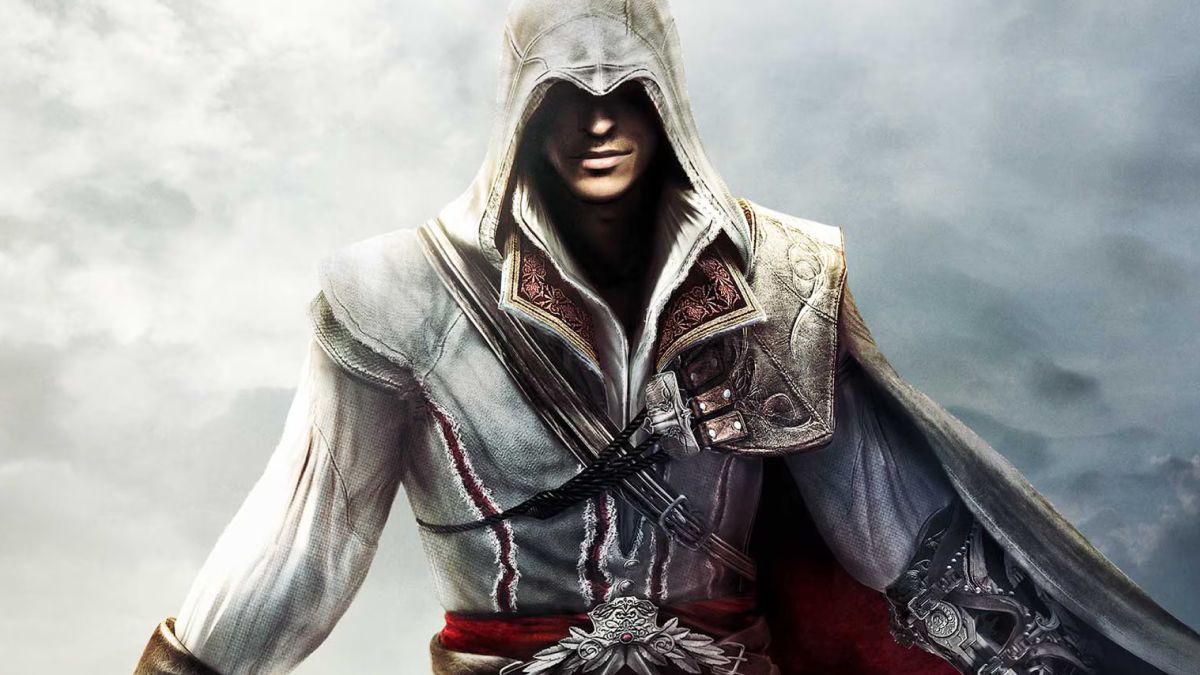
Then came Assassin’s Creed II in 2009, and oh, did it deliver. Enter Ezio Auditore, the charismatic Renaissance rogue who became the face of the series. Set in a vibrant Italy, from Florence’s golden domes to Venice’s misty canals, this game polished everything: tighter controls, varied missions, and a personal revenge tale that made you care about Ezio’s fight against the Templars. The addition of economic systems—buying shops to fund your arsenal—gave it a new layer of depth. It’s no wonder fans still call it a masterpiece; it nabbed a Metacritic score of 91/100 and sold over 9 million copies.
The Ezio saga continued with Brotherhood (2010) and Revelations (2011), each refining the formula. Brotherhood introduced Rome’s open world and a guild system, letting you recruit assassins to fight by your side. Revelations took Ezio to Constantinople, adding bomb-crafting and a hookblade for zippy traversal. These games felt like a trilogy of growth, not just for Ezio but for the series, blending history with heart. By the end, Ezio wasn’t just a character—he was family.
# The Golden Age: Exploration and Ambition (2012–2014)
Assassin’s Creed III (2012) was a bold leap. Swapping Ezio for Connor, a Native American assassin in the American Revolution, it traded tight cities for sprawling frontiers. You hunted in snowy forests, scaled cliffs, and even commanded naval battles—a first for the series. The story tackled heavy themes like freedom and betrayal, though Connor’s stoic nature didn’t quite match Ezio’s charm. Still, the game’s ambition shone, selling 12 million copies despite a mixed Metacritic score of 85/100.
Then, Assassin’s Creed IV: Black Flag (2013) stole the show. You played Edward Kenway, Connor’s pirate granddad, sailing the Caribbean in a sun-soaked open world. The ship battles, island-hopping, and shanty-singing crews made it feel like a pirate’s dream, with stealth and parkour taking a backseat but still shining. Fans adored it (Metacritic 88/100, 15 million sold), and it’s still a high-water mark for the series’ ability to reinvent itself.
Unity (2014) aimed high with revolutionary Paris, packed with thousands of NPCs and co-op missions. Arno’s tale of love and loss was gripping, but buggy launches and a crowded open world frustrated some. Syndicate (2015) bounced back in Victorian London, with twin assassins Evie and Jacob Frye bringing dual playstyles and a grappling hook for zippier traversal. Both games pushed visuals and scale, though some fans missed the tighter focus of earlier entries.
# The RPG Revolution: A New Era (2017–2020)
After a brief hiatus, Assassin’s Creed Origins (2017) reinvented the series as a full-blown RPG. Set in ancient Egypt, you played Bayek, a proto-assassin whose personal tragedy birthed the Brotherhood. The shift to open-world exploration, skill trees, and loot systems felt like The Witcher 3 meets Assassin’s Creed. The world was breathtaking—pyramids, deserts, and bustling Alexandria—and the story hit hard. With a Metacritic score of 84/100 and 10 million copies sold, it was a triumphant reset.
Odyssey (2018) doubled down, taking you to ancient Greece as Kassandra or Alexios. The RPG mechanics deepened with dialogue choices and romance options, making it feel like a living myth. The sprawling map and naval combat echoed Black Flag, earning a Metacritic 83/100 and 12 million sales. Valhalla (2020) followed with Viking warrior Eivor raiding England’s shores. Its massive world and settlement-building leaned even harder into RPG territory, selling 14 million copies despite a slightly lower Metacritic of 80/100.
# Back to Basics: Mirage and Beyond (2023–2025)
Assassin’s Creed Mirage (2023) was a love letter to old-school fans. Set in 9th-century Baghdad, it followed Basim, a thief-turned-assassin, in a compact, stealth-focused adventure. Ditching RPG bloat for tight parkour and assassinations, it felt like a nod to Altaïr’s days. Fans praised its focus (Metacritic 77/100), and its 5 million sales showed there’s still love for the classics.
Looking ahead, Assassin’s Creed Shadows (set for 2025) promises feudal Japan, a long-requested setting. With dual protagonists—a samurai and a shinobi—it blends stealth and open combat in a lush open world. Ubisoft’s teasing a return to story-driven roots, and fans are buzzing with anticipation.
# The 2D Connection: Chronicles and Spin-Offs
Don’t sleep on the Assassin’s Creed Chronicles trilogy (2015–2016). These 2.5D side-scrollers—set in China, India, and Russia—channeled Prince of Persia’s platforming roots with stealth twists. Each starred a unique assassin, like Shao Jun with her foot blade, in gorgeous, painterly worlds. They’re smaller but inventive, perfect for fans craving a bite-sized Creed fix. Handheld and mobile spin-offs, like Altaïr’s Chronicles (2008) and Rebellion (2016), also kept the series alive on the go, though they’re less essential.
# Assassin’s Creed vs. Prince of Persia: A Family Feud
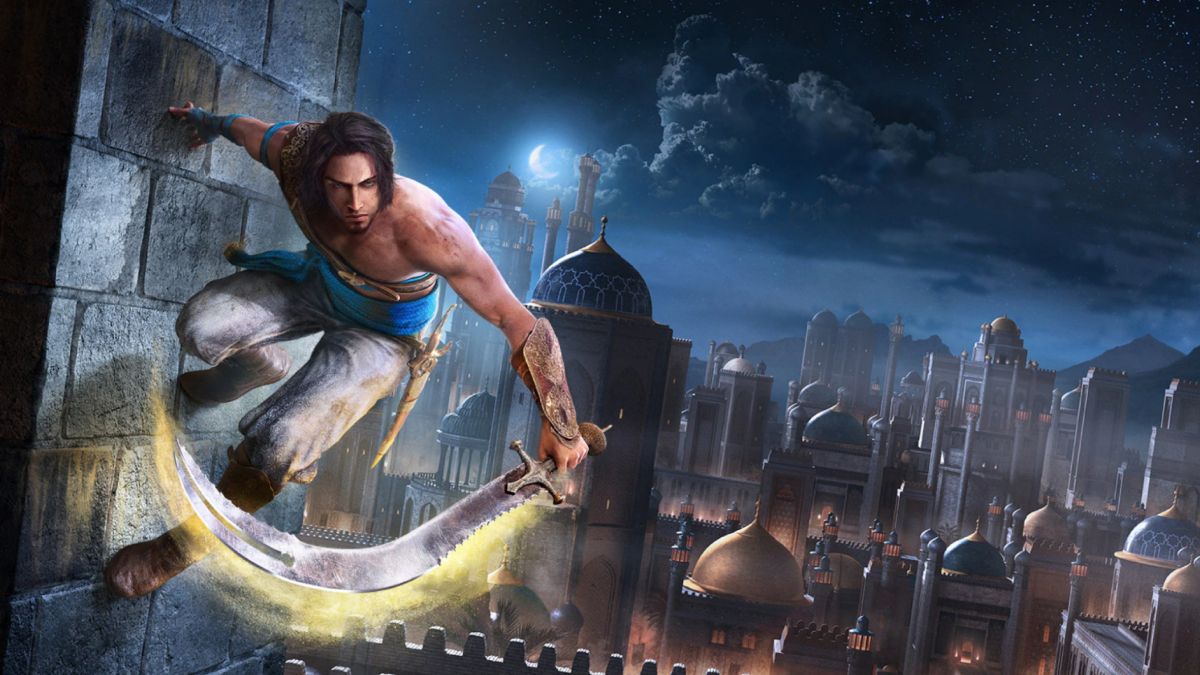
Assassin’s Creed owes its soul to Prince of Persia. The Sands of Time’s parkour and time-bending mechanics inspired AC’s rooftop sprints and hidden blades. But where Prince of Persia leaned into fantasy, Assassin’s Creed grounds itself in history, weaving real-world events with a sci-fi twist. PoP’s linear tales contrast AC’s sprawling worlds, especially post-Origins. Yet both share a knack for making you feel like a nimble hero defying gravity. Prince of Persia may be the parent, but Assassin’s Creed grew into the bolder, worldlier child.
# Where to Start in 2025?
Newcomers should dive into Assassin’s Creed II (via the Ezio Collection on PS4/PS5) for its timeless charm and tight storytelling. Want modern vibes? Origins offers a perfect blend of classic stealth and RPG depth. For purists, Mirage recaptures the series’ roots. Play them in release order for the full evolution or cherry-pick by era—Renaissance, Caribbean, or Egypt—for your favorite flavor of history.
With Shadows on the horizon and rumors of remakes (an Assassin’s Creed I refresh, perhaps?), the series shows no signs of slowing. It’s a testament to Ubisoft’s knack for reinventing while honoring roots. Whether you’re scaling Notre-Dame or sneaking through Baghdad’s souks, Assassin’s Creed invites you to live history’s shadows. Ready to leap into the Animus?
PSG Online
Author